Friday, September 20, 2013

My Skill Set No Longer Matches Your Needs

KevinMD continues to be a fertile site for resolving my writer's block.

This is such a great statement that describes how I feel when the Pain Clinic patient shows up asking me to write a letter to fix their disability claim, their WCB case or any of the other jobs I do in the Pain Clinic which they never taught me about in medical school.

Now a lot of the patients I see in the Pain Clinic have been really fzcked over by the system and I used to be happy to spend hours on the phone, fill in forms or write letters I know nobody will read on their behalf. I am really amazed that patients think my opinion is that influential.

I know that most of the patients I see in the Pain Clinic are never going to go back to work but I do my best to try and make them more comfortable and functional. This is difficult sometimes when you spend most of the visit discussing how the patient can maximize their income support from various sources.I have become less tolerable of this complete waste of my time. I now have a stock response to the patient who complains about his treatment at the hands of Workers Comp:

You have 3 options:

1. You can do what they tell you to do.

2. You can hire a lawyer.

3. You can forget about your WCB claim and get on with your life.

For disability insurance problems, I usually advise them to get their union involved (in the small minority who have a union), or get their employer involved (he usually paid the premiums so might be interested). For welfare problems, I advise them to see their member of the legislature (it's amazing, then again maybe not, how few people know who their MLA is). One of the better funded pain clinics in our province actually has an "Entitlement Group" where patients can learn how to navigate the system.

There is of course the patient in whom I do write a letter who brings the letter back demanding revisions or asks for another letter because the letter I sent didn't get the response they were looking for. All this doesn't necessarily make me popular, like the other blogger says, "My Skill Set No Longer Matches Your Needs".

Gold Plated Equipment

Somebody printed out this article on put it on our bulletin board, so I was able find it online.

We use a lot of advanced equipment in anaesthesia and a lot of what we use has become more complicated an expensive since I have been in practice.

On the other hand, consumer goods have become more complicated but less expensive over the same time. For example I paid $600 ($1259 in 2013 dollars) for a VCR in 1983. Assuming I could even find one, I suspect I would be paying about $50 now in 2013 dollars. I bought a Blue Ray player at Costco for $100 last year. My first desktop computer with 1 megabyte of RAM cost $4000 in 1991. My latest lap-top cost just over $400. What is most medical equipment except a big computer?

As the article points out, even allowing for a modest profit, it is possible to build a videolaryngoscope for a lot less than we currently pay for one. A couple of weeks ago while walking thru Costco, I found a flexible fibre-optic camera on sale there for about $100 complete with a videoscreen. This would be useful for plumbers but it could have all kinds on other uses, like looking for the stuff that falls behind my desk. Or as I told my wife, a home sigmoidoscope. This just shows how cheaply a fibreoptic device can be made nowadays.

I wonder how much of the healthcare costs which we are told are spiralling out of control are due to the capital costs of "medical grade" equipment that we have to buy. In a country like Canada which has for all intents and purposes no electrical manufacturing sector, this means a transfer of our tax dollars to places like South Korea and China not to mention the money that gets skimmed off by American or European middlemen we have to deal with. A country with a population of 30 million like Canada could probably produce it's own cheaper medical devices on a break even basis, paying workers good wages but that would require government intervention and even a bleeding heart liberal like me doesn't trust the government that much. Bulk purchasing has been shown to work although getting multiple hospitals and practitioners to agree on one product is next to near impossible plus you give one company a monopoly and the quality of service goes down.

One of the effects of high prices is that sometimes hospitals just won't buy a piece of equipment you feel is necessary because it is too expensive. This affects surgery less than anaesthesia and a lot of the equipment we feel we "need" adds nothing to patient care; however I remember the struggle to get pulse oximeters in the mid-late 1980s. They cost $10K then despite not being much more sophisticated than a VCR and it wasn't until the price came down and (less importantly) practice standards came out that their adoption became universal.

Now of course medical equipment is a little different from consumer equipment in that it has to be sterilizable and may have higher standards of electrical safety but certainly not enough to justify the huge mark-up which as the article points out is only equalled by crack cocaine. It would be great if for all that extra money went towards a more durable product but we all know how much downtime medical equipment spends being serviced and the cost of that service.

One of the plastic surgeons told me he was going to do video-assisted carpal tunnel releases in his office. Instead of the expensive monitor the company wanted him to buy, he just went to Best Buy and picked up a flat screen TV. Expensive monitors have proliferated all over the ORs and endoscopy suites which are probably no more sophisticated (maybe less sophisticated) then the brain-sucking Big Screen TV in my mancave but probably cost 10X as much.

Consumer health products do not seem to affected by the mark-ups that the hospitals pay. You can buy a home ECG monitor like this, or a finger pulse oximeter for under $100. Devices with cables that work with your i-phone are now available.

This remains one of the real scandals in medicine and it would be nice if our politicians and media stopped harping on how much doctors and nurses get paid and looked into this.

Friday, August 30, 2013

Non-therapeutic touch


This post is puts it more eloquently than I ever could and to our credit (and to everybody elses discredit) is written by an anaesthesiologist.

Right on.  During the touchy-feelie parts of medical school I had to endure, they  talked about the importance of touching patients and how to do it in an appropriate fashion.  Aside from the touchy-feelie aspects, we learned in our physical exam sessions that you could actually get useful information like skin temperature, clamminess, edema and texture just by touching patients.  I haven't come across it yet but I suspect some people are now donning gloves just examine patients or take their blood pressure.

Nobody likes to be a vector for infection but our infectious disease department expects you to wash your hands before AND after wearing gloves so the gloves are mainly for your aesthetic protection. I wear them now for starting IVs and doing injections in the Pain Clinic but I know they don't protect against needle-sticks.

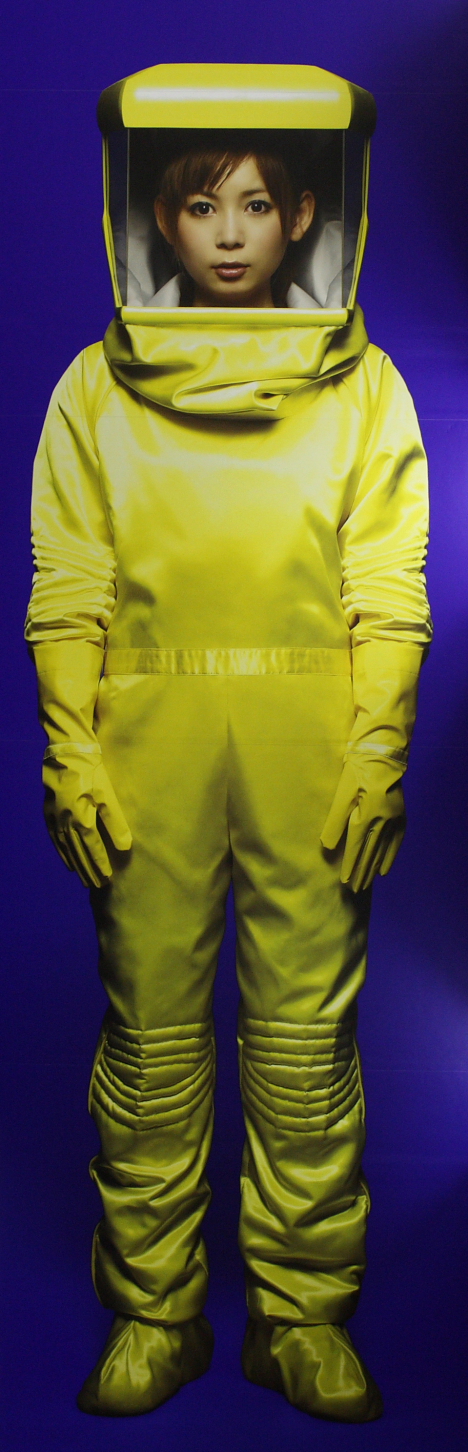
Patients in isolation are another matter and the odd time I have to assess a patient either as chronic pain consults or for anaesthetic purposes, I feel like my hands are metaphorically tied behind my back.  Trying to assess and counsel a patient while dressed up in a yellow gown, paper hat, mask and gloves sends the wrong type of message to the patient at what may be a stressful time for him plus it makes the examiner so uncomfortable that I at least just want to get things finished and get out of there as quickly as I can.  Hardly good medicine.

As the author points out there is a great deal of information that can be obtained with a good stethoscope and I must admit that in the holding area, I am often remiss in this.  Stethoscopes according to our infection control department are difficult to sterilize without damaging the plastic.  They haven't gone as far a banning stethoscopes which would really look bad, not that more than half of doctors even own one now, but are just ignoring this.
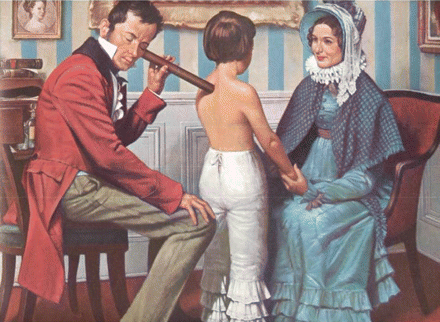
Laennec's stethoscope here is easily sterilized.  Maybe we should go to this one.

Thursday, August 29, 2013

Crying wolf

Something embarrassing happened to me a few years ago.  I was on call and went up on the wards to see a few patients with epidurals.  Our hospital like just about every hospital I have ever worked at periodically has the fire alarms ringing endlessly either as drill or because of what is almost always a false alarm somewhere else in the hospital.  I have no argument with hospital fire alarms going off indiscriminately.  After spending about 15 minutes on the wards listening to the alarms I retreated to the relative quiet of the operating room and went to our department's office which is adjacent to the recovery room.   I sat by the computer and started wasting time on the internet when the nurses in recovery room pushed the panic button which sends a loud alarm which can be heard all over the OR telling any anaesthesiologist who is available to get his ass to the recovery room because something bad is happening.  That would normally have been somebody like me who was sitting at the computer about 10 feet away.  Problem was having just come from an environment of alarms, I had been completely habituated and continued to surf and it was only the stampede of about 7 colleagues who had abandoned their patients on the table which alerted me that something was actually wrong.  Seeing my colleagues had the situation in hand, I slunk out of the office lest anybody ask why I hadn't gotten off my ass.

I found this  neat article on kevinmd (which despite having such a stupid name has some good stuff)

I still remember the first time I went into an operating room in second year medicine.  The one thing I remember was the sepulchral quietness of the room, the sound of the ventilator bellows, the beep of the EKG monitor, the Muzak in the background and the hushed voices.  If you went into any operating room today, it is a pretty good chance that at least one alarm will be going off.

I suspect that if most anaesthesiologists are like me, they spend a few minutes a day turning off as many alarms as their machine and monitors will allow.  Because they are annoying and they distract you from the alarms and sounds you actually need to hear.  (Actually one of my colleagues sets the alarm limits so that the alarms will go off all the time when he is working afterhours because they keep him awake.)

In 1986 when I started my residency there were very few monitors or alarms.  We had an EKG, a manual blood pressure cuff and some people used a precordial or esophageal stethoscope.  When we got the pulse oximeters many surgeons complained about the extra beep.  (The ENT surgeons of course hated them because they showed how much patients desaturated during endoscopies).  Now we have NIBPs which will alarm if the pressure is too low or high or more frequently because they can't get a reading, EKG with their alarms for high and low rates (the new monitors we bought had QT interval alarms which given that anaesthetics increase the QT, alarmed continuously until we figured out how to turn them off), ETCO2 and who knows what else.

Alarms on machines have proliferated.  The first machines I used as a resident had disconnect alarms and oxygen monitors which alarmed if the FiO2 dropped below a limit.  These were actually after-market devices which where added onto the basic machine which was sold with no alarms at all except for the ingenious fail-safe whistle which went on if the oxygen supply failed.

It was early in my residency that our local Centre of Excellence purchased it's first Drager machine not affectionately known as Herman.  Herman had alarms for everything and gave an annoying de-da-de-da-dot over and over again.  The Drager rep proudly told me that they had done research and had ascertained that this combination was the most annoying and difficult to annoy combination of sounds.  Thanks guys.   We are currently trialling machines at our hospital.  I asked the rep if it was possible to customize alarms like cell phone ring tones.  I suggested that I would like "Another One Bites the Dust".  He laughed a little nervously.

Now every anaesthetic machine comes with an array of alarms for a variety of conditions.  Some of them I don't even understand.  There are alarms like High Inspired Gas which goes off when you are trying to do a mask induction and low MAC which goes off when you are trying to wake a patient up or doing TIVA with a little gas for your own piece of mind.  When I get the alarm, I first look at the sat, the ETCO2 trace see if the patient seems to be getting anaesthetics and oxygen and then randomly make adjustments until the alarm turns itself off.  To turn off or adjust the limits on many of these alarms it is necessary to hunt through multiple menus until you get to where you are at.  This just distracts you from important things you could be doing like reading the paper, surfing the internet and oh yes monitoring the patient.

On top of this we have other alarms besides ours going off in the OR like the tourniquet which alarms after an OR plus on top of that we have the artificial noise from the cautery.  The electrical beds our hospital recently bought emit a piercing alarm when the bed is unlocked (i.e. when you are moving a patient in or out of the OR on his bed).

We started doing endoscopy sedations about 2 years ago.  After a few weeks, the supervisor came to me and asked if I could get my staff to either a)  turn the alarms off or b) do something about them.  The major culprit was the ETCO2 alarm attached to the nasal prongs.  As I found out a few months ago when I tried using it, no matter how you set the limits it basically continuously alarms even in conscious patients whom you haven't even touched yet.  Despite this our national association has made this a standard of care.  I suspect the wise people who make these standards are academic anaesthesiologists who haven't given a real anaesthetic without a bevy of techs and residents to hold their hand and wipe their bum in years.  Some people have advocated that the people we currently monitor on the ward with pulse oximeters should get these ETCO2 monitors instead.  I can only imagine the frustration of the nurses at the false alarms generated by these machines and speculate at how long before one gets pitched thru the window.

And of course it is when the shit is actually hitting the fan that the alarms become most annoying.  Like, yes I know the BP is 40/0 and I am trying to do something about it so shut the fuck up!  Our recovery room nurses are forbidden to turn off or silence alarms so the odd time I bring a patient out with sats in the 80s I have to listen to the alarm until oxygen is applied and the sat comes up on its own as it mostly always does.

It would be nice if we could say that most of the alarms actually enhance patient safety.  Anaesthesia is a lot safer now than when I started in 1986 and not because we have more alarms but because we have the pulse oximeter.  And further it is not the cut-off point of the alarm which is important.  A gradual drop in the SaO2 from 99 to 94 probably needs to be looked at and if you are going to wait for the alarm to go off at 90 you may have missed the boat.  Curiously most of our pulse oximeters have a default setting of no volume on the pleth so I have to actually turn this feature on every time. Likewise a gradual trend upwards in the heart rate may indicate something sinister well before the high heart rate alarm goes off.

I am certainly not advocating returning to the state of monitoring which existed when I started my residency. I remember as an intern working with the Professor of Anaesthesia who lectured me over the whole day on how much monitoring was unnecessary and how  he hardly ever put EKG electrodes on his patients (he even knew how much each one cost).  It would of course be interesting to know how much we spend on EKG electrodes per event recognized and treated and I suspect it is thousands of dollars, not that I am going to give up my EKG.


Tuesday, July 23, 2013

Something I could have written myself albeit less eloquently

I found this old post thru KevinMD.  It apparently was quite controversial when it came out.  I may just comment on it something.  In the meantime read it for yourself.

Friday, July 19, 2013

Oh Professor

For the record I do not advocate spanking male or female students, not on their bare bum and not with a slide rule.  When I was thinking of a picture to go with this post, I remembered this cover of National Lampoon which came out in September 1975, the same month I started university.  National Lampoon has not regularly been in print for about 20 years.  The problem is that half of its humour is now mainstream and the other half is horribly politically incorrect.

I digress.

I have never been the outstanding academic student.  Like many doctors I was usually near the top of my class in grade school, rarely at the top.  Conventional wisdom when I was an undergrad was that you needed an 85% average to get into medical school, that is exactly what I got no more, no less and I got into medical school.  I don't think I am terribly smart, I do and have done a lot of stupid things.  It is just that it is almost like the school and university system was designed for me to excel without really trying that hard.

Entering medical school, it occurred to me that I could become an outstanding academic doctor or I could just scrape through.  Within the first few weeks of medical school it became quite apparent that a significant number of my classmates were either, smarter than me, prepared to work a lot harder than I was, or smarter than me and prepared to work a lot harder than me.  With that in mind, I focused on first passing and secondly learning the minimum I would need to become a good doctor.  Some things interested me more than others and I paid more attention to those.  I tried to have as normal a life and as much fun as possible and more or less succeeded.  I sat in the back of the lecture hall, read the newspaper if the lecture was boring and made fun of the keeners who sat at the front and asked questions.  I also drank mass quantities of beer on Friday and Saturday nights and not infrequently on weeknights.

I treated internship like a job and did very little reading, I figured if I hadn't graduated with the basic knowledge, something was wrong.  Sailing was more or less smooth.  One night when I was woken up to do an EKG on an ICU patient (ICU nurses can't do EKGs go figure), one of the nurses told me, "at least next year when you are a resident you won't have to do this."  I told her I had no intention of ever being a resident.

Specialties never interested me.  When you are 24, the idea of spending what amounts to 1/6 of what you have already lived in servitude was less than attractive.

For various reasons I only lasted 3 years as a general practitioner.  Deciding to go back into a specialty was for me a huge life change, which I didn't undertake lightly without considering other career options like law school.  I remember the feeling of "what the hell have I signed up for" on my first day.  Fortunately I took to anaesthesia like it was like I was born to do it.  I was a little scared about the whole academic aspect of it so I read from day one (actually I bought the textbooks before my residency) as opposed to the residents who weren't scared of the whole academic aspect who didn't feel pressured to read.  I had never enjoyed giving presentations but now I had to give them so because I was so scared of being publicly humiliated (which was legal to do to residents them) I actually worked hard on them and came up with some incredibly polished presentations amazing myself.

I was surviving even thriving in academia but I knew it wasn't for me and after finishing my residency my first job was in a community hospital.  About 1 and a half years into what I still remember fondly as a pleasant sojourn as a community anaesthesiologist, for reasons I still can't figure out, I answered an ad to work at the Centre of Excellence.

In a perfect world academic teaching hospitals would go out of their way to attract the best and brightest clinicians financially and otherwise.  In reality, unless you have gotten onto the Geographic Full Time (GFT) gravy train or have a subspecialty interest which your academic centre supports, they are soul-destroying factories where one puts in time while waiting for a position at another hospital in town to open up.  Positions at other hospitals were not forthcoming in the early 1990s; later when jobs were more forthcoming a lot of the bright minds brought to the Centre of Excellence did not even pretend to be interested in working there for the long term and actively sought work elsewhere within months of arriving.  Jobs at other hospitals as I mentioned were not available when I arrived at the Centre of Excellence; I settled in and when the opportunity to run the Pain Clinic came up I took it which made me a sub-specialist.

With my appointment at the Centre of Excellence came an academic title.  This initially was Clinical Lecturer although the chairman assured me that I would soon be elevated to Clinical Assistant Professor.  The title came with no money attached and no real perks beyond a library card, the ability to use the University's gym for a discount and the ability to join the Faculty Club for the usual fees.  There is however a certain cachet to an academic title although maybe I am the only person who thinks that way.  I am a little reminded of the episode of Cheers where Rebecca gives Sam and Woody titles instead of a raise.


My academic career remained stalled at Clinical Lecturer for about 7 years,  (I am sure the chairman just forgot) but I was eventually "promoted" to Clinical Assistant Professor and then Clinical Associate Professor.

Running the Pain Clinic made me the expert on chronic pain in a University Teaching Hospital which lead to requests to give talks and to lecture the medical school which I took on.  I even got invited to speak at national meetings and eventually developed a pretty impressive academic CV.  I was a little evangelical and ambitious with respect to chronic pain; I always looked on talks as a way to solidify my standing and build my referral base.

After 13 years I finally left the Centre of Excellence.  I noticed soon after I had been dropped from list of part-time academic staff on the University Department's website, so I figured I was no long a Clinical Associate Professor and took if off my CV and letters.  After about 3 years, I did get a letter from the Dean re-appointing me.  About a year ago in the spirit of "glasnost" the new Chairman invited staff at community hospitals with University appointments to apply for promotions, so I thought what the hell and applied.  A few months later the assistant Dean, who I play saxophone with, congratulated me.  "On what?", I said.  "Your promotion,"  said the assistant Dean and that was how I knew that I was now a Clinical Professor.

The University made up a nice plaque commemorating my new exalted status and the Chairman presented it to me last week over dinner which the Department paid for.  Periodically somebody I haven't seen for a while runs into me and congratulates me.  "For what?" I say and they say, "For your professorship", so I guess it is a really important thing, even though I tell people a Clinical Professorship and $1.65 will buy me a coffee.

Somebody at a talk I attended pointed out that most doctors are a little insecure and believe that they are frauds and are just waiting to be found.   I knew right away he had me down and I am still waiting for somebody to come and tell me I am full of bullshit and puncture my balloon.  I still think of myself reading the sports section in the back of the lecture hall and my general distaste for academia.  In some ways I feel a little sheepish, in others I am thumbing my nose at every academic doctor who talked down to me.  Because  hey, I am a Full Professor now and money can't buy that title.

Sunday, July 7, 2013

Work-life balance

This is an interesting perspective.  Just for your reading pleasure.  Maybe I will comment on it sometime later.